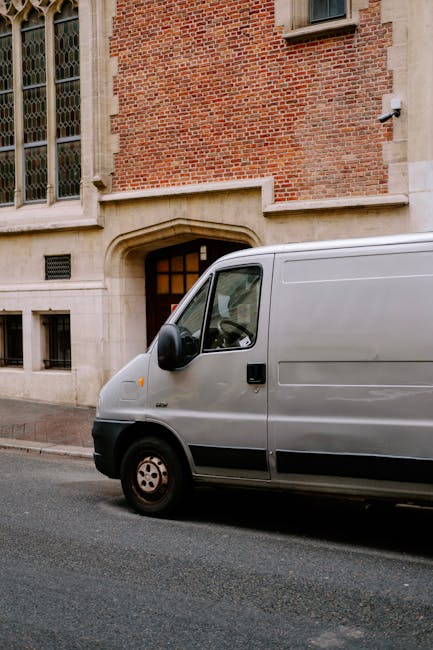
Man With A Van Harrow

Man With A Van Harrow provides a practical removals service for people and businesses who need goods moved with care, sensible planning and a vehicle sized to suit the job. Our work covers single-item transport, part-load moves, small home removals and straightforward office relocation tasks where a full-scale lorry may be unnecessary. The aim is simple: to move belongings in an orderly way, reduce handling risks and keep the process clear from first enquiry through to completion.
For many customers, the main advantage of this kind of service is flexibility. We can handle sofas, beds, cabinets, boxes, appliances and mixed loads that do not fit neatly into a standard courier booking. We also support local and longer-distance transport where the load, access and timing are all agreed in advance. If you need a quotation, you can start with the details of the items, the collection point and the delivery location, then compare the practical options.
The service is suited to people moving home, clearing furnished rooms, shifting stock between sites or arranging a careful one-vehicle move without unnecessary complexity. It is still important to plan the move properly, because access, lifting conditions and the size of the load affect the work involved. Clear information at the outset helps us shape the right approach, whether that means one run, multiple trips or extra handling for awkward furniture.
Home removals and small moves
Home removals often need a calm, methodical approach rather than a large team and a long vehicle. We help with flats, terraced houses, maisonettes and smaller family moves where the contents can be managed efficiently with a van-based service. That can include dismantled furniture, sealed boxes, soft furnishings and everyday household items that need to be loaded securely and delivered in the right order.
When planning a house move, it helps to separate the items that need careful handling from the items that can be loaded more quickly. Fragile pieces, mirrors and electronics benefit from sensible wrapping and stacking, while bulky furniture usually needs space planning before loading begins. If you are comparing options, the right quotation should reflect the actual work involved, not only the mileage between addresses.
What a domestic move may include
Typical work can cover single rooms, partial property moves, overflow items that do not fit in the family car, and delivery of purchased furniture from one address to another. Where access is tight or parking is limited, the load plan becomes more important than the distance itself. For that reason, it is useful to think through stairways, lifts, narrow halls, loading points and any heavy items that need extra care before a collection is arranged.
Furniture transport and item collection

Furniture transport is one of the most common reasons people contact a van-based removal service. We can move wardrobes, tables, chests of drawers, shelving, beds, mattresses and similar household pieces that are too bulky for standard delivery arrangements. In many cases, the task is not complicated, but it does require good handling, enough blanket protection and secure placement inside the vehicle so the item arrives in the same condition it left.
For customers who have bought second-hand furniture, cleared a room or arranged a sale through a private listing, collection timing matters as much as transport. A sensible plan takes account of access at both ends, the condition of the item and whether it can be carried as assembled or should be prepared first. Measured, careful loading is especially important for heavier wooden furniture and items with glass or polished surfaces.
Useful information for this kind of job includes the number of pieces, approximate sizes, whether lifting is needed from upstairs, and whether anyone on site can help with access. That does not mean the move must be overcomplicated; it simply makes the service more predictable. For straightforward pickups, the aim is to keep the process efficient while still allowing for safe handling and enough protection for the cargo.
Office removals and business deliveries
Our removals work also covers smaller office relocation tasks, business deliveries and site-to-site transport where a compact, dependable vehicle is the best fit. Offices often need desks, chairs, storage units, IT equipment, archive boxes and boxed supplies moved with care so that operations can continue with minimal disruption. The service is useful for local office changes, furniture refreshes and the transfer of items between branches or storage locations.
Business moves tend to work best when the load is itemised in advance. That makes it easier to understand whether the job is a simple collection, a partial move or a more structured relocation. If equipment contains sensitive components, it is worth separating it from general furniture early on so it can be loaded and unloaded appropriately. For many organisations, a clear, practical plan is more valuable than a vague promise.
Because commercial loads can vary widely, we look at access, packing, loading order and any timing limits before agreeing the work. A small office move may only need one van run, while a mixed load might benefit from a staged approach. If the job includes documentation, computer equipment or fitted items that must be treated cautiously, that should be included in the quotation details from the start.
Packing support and careful loading

Packing and loading are central to any removal service, because even a short journey can become risky if items are left unsecured. We handle the practical side of loading carefully, placing heavier pieces first and arranging lighter goods so they do not shift in transit. When required, goods are separated by shape and fragility so that boxes, furniture and soft items can travel in a sensible order rather than as a loose pile.
Some customers need help before the vehicle even sets off. That might include preparing items for movement, grouping boxes by room, or deciding which belongings should be moved together and which should travel separately. A concise list can be very helpful here. It should cover what is going, what needs special handling and whether there are any access constraints that could slow the work or change the loading sequence.
Practical preparation that keeps things tidy
There are a few simple ways to make a move smoother without turning it into a major project: keep loose items boxed, empty drawers where possible, secure fragile contents and make sure paths to the door are clear. If something is awkward, heavy or valuable, say so early. Good loading starts with good information, and that usually leads to a more accurate quotation and a more efficient move on the day.
Removal options for different load sizes
 Not every customer needs the same type of move, which is why it helps to distinguish between single-item transport, small-part-load removals and fuller domestic or business clearances. A single piece may only require a brief collection window and a direct route, while a partial move might need a little more time to balance the load correctly. The service should fit the job rather than force the job to fit a fixed model.
Part-load work is often useful where the customer has several items but not enough for a dedicated large removal vehicle. In that case, the move can still be organised neatly, provided the load is described accurately. For example, a mixture of household boxes, a wardrobe and a dining table may need a different approach from a shipment of lightweight bags or flat-packed furniture. The key is to match the vehicle and handling plan to the actual contents.
When deciding which option is right, think about the balance between volume, weight, access and timing. If a load is bulky but not especially heavy, loading shape matters. If the items are dense or fragile, protection and careful placement become more important. For this reason, a precise description of the move helps us advise on the most suitable arrangement and avoid unnecessary back-and-forth.
About Harrow
Harrow is a large town and borough in north-west London, known for combining long-established suburban streets with significant green space and a substantial civic centre. One of the most distinctive landmarks is Harrow School, founded in 1572, whose hilltop buildings and playing fields are a long-standing feature of the area’s identity. The borough also includes diverse residential districts, shopping areas and transport links, with Harrow-on-the-Hill serving as both a historic settlement and an important focal point in the wider townscape. The old village core retains a more compact character, with narrow streets and older buildings set apart from the denser retail and residential development around it. Harrow’s landscape is shaped by its hills, local parks and a sequence of conservation areas that preserve parts of the earlier suburban growth. Alongside the school and the traditional centre, the borough contains civic buildings, libraries and places of worship that reflect changing communities over time. The Metropolitan line and other rail links have historically supported its growth and continue to tie it into the wider capital, while the surrounding roads connect residential neighbourhoods with nearby districts. Green spaces such as Headstone Manor Recreation Ground and other local parks provide a contrast to the built-up streets, helping to give Harrow a balanced character between town and suburb. That mix of heritage, transport and open land is a key part of how the place is understood today.
Quotation details and service planning
To prepare a useful quotation, it is best to describe the move in practical terms rather than broad generalities. List the items, note whether there are stairs or lifts, and mention anything that is especially heavy, fragile or awkward. If furniture needs dismantling before transport or reassembly afterwards, include that too. These details help shape a quotation that reflects the actual work instead of relying on guesswork.
A clear quotation also depends on the route and access at each address. Parking, loading distance, restricted entry points and the layout of the property all influence how the job is carried out. It is also worth checking whether the move is one way, return based or split across more than one stop. When the information is complete, the arrangement is usually easier to plan and easier to confirm.
If you are ready to move ahead, you can request a quotation with the item list, collection point and destination. For a straightforward enquiry, send the essentials first and add any special instructions afterwards. That keeps the process concise and gives the service provider enough detail to respond sensibly. We can then discuss the most practical way to complete the work without adding unnecessary complexity.
Handling access, timing and unusual items
 Some moves are simple from a distance but more demanding once access is taken into account. Narrow staircases, split-level homes, top-floor flats, basement rooms and limited parking can all affect how a van move is carried out. This is why timing and route planning are part of the job, not an afterthought. A careful approach means fewer delays and better protection for the items being carried.
Unusual items should be identified early. That might include oversized mirrors, gym equipment, long worktops, garden furniture, framed artwork or boxed collections that are heavier than they look. Each type of item may need a different loading method or extra packing. If several awkward pieces are being moved together, it can help to separate them in the description so the quotation accounts for the right handling requirements.
For customers comparing services, the useful question is not simply who can turn up with a van. It is who can move the right load, with the right protection, in a way that fits the property and the schedule. That is the point of a well-run man and van service: it offers a manageable way to move goods without overspecifying the job or underestimating it. Request a quotation today, and we can help you assess the best way to move your items in Harrow.
Why a van-based removals service suits many jobs
Van-based removals are often chosen because they sit between courier delivery and full-scale removals. They are flexible enough for mixed loads, but focused enough to handle furniture and household goods properly. This makes them a sensible option for customers who want a service that is practical rather than elaborate. The vehicle can be matched to the load, which helps keep transport efficient and avoids paying for capacity that is not needed.
Another advantage is that the service can be adapted to the task. A same-day collection may be appropriate for one job, while another may involve a scheduled move with multiple items and a more careful loading sequence. Business customers, landlords, tenants and homeowners all tend to value this adaptability, especially when the contents are too substantial for a standard parcel carrier but too small for a full removals contract.
If you are unsure how your move should be described, begin with the bigger items and add the rest. That gives a useful starting point for planning the move, even before any detailed discussion. We can then look at whether the job is best treated as a single collection, a small house move or a structured office relocation, depending on the contents and the access involved.