.jpg)


Harrow council parking permits for removals vans what to know
Posted on 01/08/2026
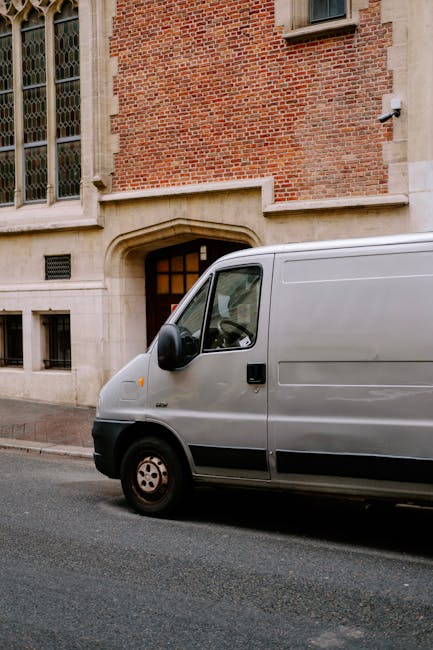
Harrow council parking permits for removals vans: what to know
If you are moving house, flat, or office in Harrow, parking can become the part that quietly causes the biggest headache. The van is booked, boxes are labelled, and then the awkward question lands: do you need Harrow council parking permits for removals vans, and what exactly should you know before moving day? It sounds simple. It rarely is. A short restriction, a permit that was not arranged in time, or a street that is tighter than expected can turn a smooth move into a slow, stressful one.
This guide breaks the topic down in plain English. You will get a practical view of how parking permits usually work for removals vans, why they matter, who needs them, the mistakes people make, and how to plan a move without unnecessary drama. We will also touch on local access issues, timing, and the small details that can make a big difference on the day.
Why Harrow council parking permits for removals vans what to know matters
Parking for a removals van is not just about convenience. In many parts of Harrow, especially on busier roads or around tighter residential streets, the space you need may already be controlled by a permit scheme, a time restriction, a yellow line, or a loading-only window. If you ignore that, even for a short while, you risk delays, fines, frustrated neighbours, and a crew that has to carry furniture farther than planned. That last part is the one people underestimate.
Let's face it: a removals van is not a family hatchback. It needs room to stop safely, load without blocking traffic, and ideally sit close enough to the front door that a sofa is not being marched half-way down the street. For a terraced road, a narrow cul-de-sac, or a busy estate, good parking planning often matters as much as the packing itself.
There is also a timing issue. Many moves in Harrow happen under pressure. Completion runs late, a landlord hands over keys at noon, or a student move has to happen before a rental handover. If parking is not sorted, those time pressures get worse very quickly. That is why this topic is worth thinking through early, not on the morning of the move while everyone is standing around with a trolley and a slightly haunted look.
For broader moving planning, it can help to read the removals services overview and the company's notes on pricing and quotes, because access problems and waiting time can affect the final job in ways people do not always expect.
How Harrow council parking permits for removals vans what to know works
The exact process can vary depending on the street, the type of restriction, and whether the location is on-street or on private land. The basic idea is straightforward: if a removals van needs to stop somewhere controlled, you may need permission to park there, or you may need to use a legal loading arrangement that fits the council's rules.
In practical terms, there are usually a few common scenarios:
- Permit-controlled residential bays where only vehicles with the correct resident, visitor, or temporary permit can park.
- Shared or limited waiting spaces where stopping is allowed only for a short time.
- Single or double yellow lines where loading may be permitted in some cases, but only if the vehicle is actively loading and not left unattended.
- Suspended bays or restricted access streets where special permission may be needed in advance.
The key thing is that a removals van does not get a free pass just because it is there for work. Sometimes loading can be allowed, sometimes it is not. Sometimes a permit is needed, sometimes a short stop is acceptable. The fine detail matters. And yes, the fine print can be a bit of a faff, but it is still better than a ticket tucked under a wiper blade when you are already juggling boxes and a kettle.
In many moves, the safest approach is to confirm the parking situation before the removal day, then build the move plan around that. That might mean choosing a different arrival time, using a smaller van, arranging two vehicles, or setting up a short hand-carry route from a legal parking position. If you are moving into or out of a flat, you will notice this issue even more sharply, which is why flat removals in Harrow often need tighter parking planning than a house move with a drive.
If your move is more urgent than expected, the section on same-day removals in Harrow can also be useful because short-notice jobs usually need sharper coordination around access and parking.
Key benefits and practical advantages
Getting the parking side right does more than avoid hassle. It improves the whole move from the first lift to the last. Here are the main benefits people tend to feel immediately:
- Fewer delays: the crew can start loading instead of circling the block or waiting for a space to open up.
- Lower physical strain: shorter carries mean less lifting, less fatigue, and less chance of bumped corners or strained backs.
- Better vehicle safety: a van parked legally and sensibly is easier to manage, especially on tighter roads.
- Less stress for the customer: you are not trying to solve parking while the clock is ticking.
- More efficient costs: avoiding wasted time can reduce knock-on charges where a job is priced by time or labour.
There is another, quieter benefit: better relationships with neighbours and building managers. A badly parked van outside a block can cause complaints very quickly. A well-planned stop, by contrast, tends to be barely noticed. That is ideal. Nobody wants to be remembered as "the moving people who blocked the street at ten on a Tuesday."
For anyone comparing moving options, it may help to review man with a van in Harrow alongside removals in Harrow. Parking needs can differ depending on the scale of the move, the size of the vehicle, and how many crew members are involved.
Who this is for and when it makes sense
This matters for more people than you might think. It is not only for large house moves. If a vehicle is stopping on a controlled road, the parking question comes into play.
- Home movers: especially those leaving or entering terraced streets, flats, maisonettes, or estates.
- Students: moving into shared accommodation, often with limited loading space and a lot of short-notice timing pressure.
- Landlords and letting agents: coordinating handovers where access has to be neat and time-sensitive.
- Office movers: where the van may need to stop near a commercial road or outside a shared building.
- People moving bulky items only: such as wardrobes, sofas, or pianos, where you may still need a proper loading spot.
It is also worth paying attention if you live near a road that regularly fills up early, or around school-run hours, event traffic, or commuter parking pressure. Harrow has plenty of places where a parking space disappears by the minute. A van arriving at the wrong time can find itself in a very unhelpful situation.
If the move includes awkward items, you may want to read about furniture removals in Harrow or piano removals, because heavier pieces often make parking and carry distance far more important than people first assume.
Step-by-step guidance
Here is the practical sequence I would recommend. Simple enough on paper, but it saves a lot of grief in real life.
- Check the street conditions early. Look at the road outside both properties. Is there a bay, a yellow line, a permit zone, a dropped kerb, or a tight bend? Small details matter.
- Confirm the building rules. Some flats and managed buildings have their own access rules, loading points, or booking requirements. These can be separate from council parking controls.
- Decide what the van needs. A small van, transit, or larger removals vehicle may each create different parking issues. Bigger is not always better if the street is awkward.
- Plan the timing. Early morning may be easier for parking, but not always for neighbours. Midday can be busier. There is rarely a perfect slot, just a least-bad one.
- Arrange the permit or loading plan in advance. If permission is needed, leave enough time to deal with it properly.
- Brief everyone involved. The driver, the movers, and the person handing over keys should all know where the van is meant to stop.
- Keep a backup plan. If the ideal space is taken, know where the fallback space is and how far the carry route becomes.
A useful habit is to do a quick "walk the route" check the day before. Stand at the door, look towards the street, and picture a sofa coming out while traffic passes. That one mental picture often reveals problems you would otherwise miss.
For an even smoother packing process, you may find packing and boxes in Harrow helpful, because the cleaner the packing plan, the less time the van sits loading in a restricted space.
Expert tips for better results
After enough local moves, a few patterns become obvious. Not dramatic secrets, just the sort of practical details that save time and reduce friction.
- Choose the shortest legal carry route. Even a legal parking spot can be a poor one if it turns every item into a long walk.
- Label heavy items clearly. If a mover knows which box is fragile or which piece is the awkward one, they can load more efficiently.
- Tell the mover about access problems early. Steps, shared entrances, narrow hallways, and estates all change the parking and loading plan.
- Keep the van side clear. On moving day, loose bags, coats, and stray items can slow everything down. It seems minor, but it adds up.
- Use a service that understands Harrow streets. Local knowledge often helps more than people expect, especially where parking is tight or unpredictable.
One small but useful tip: if the move is happening in colder or wetter weather, loading takes longer because everyone moves more carefully. A damp pavement, a bit of drizzle, and a narrow bay can make the whole operation feel twice as fiddly. It is what it is.
If you want to better understand how local conditions shape removals, this local parking tips article for Station Road is worth a look, and bulky item access problems on Harrow estates covers some of the trickier real-world access issues.

Common mistakes to avoid
The biggest mistakes are usually simple ones. That sounds obvious, but obvious mistakes are the ones that cost the most because people assume they will be fine.
- Leaving parking until the day of the move. By then, you are already under pressure.
- Assuming loading always counts as parking. It does not. The distinction matters.
- Booking the wrong size van. A larger van can create more parking issues than it solves.
- Ignoring estate or building rules. Council rules and building rules can both apply.
- Forgetting the return journey. The outgoing property and the new property may both have restrictions.
- Not warning the removal team about tight access. This one causes avoidable delays more often than people realise.
There is also a tendency to think, "We will just be quick." To be fair, quick is not the same as compliant. A vehicle can still attract attention even if it is only there for a few minutes. Councils and enforcement teams do not usually grade on effort.
If you want a clearer view of how access issues affect pricing, read how to avoid hidden removals charges in Harrow. It connects closely with parking and timing, even if the subject at first looks like a pure pricing issue.
Tools, resources and recommendations
You do not need a huge toolkit to manage parking well. What you do need is a decent plan and a few basic checks.
- Measuring tape: useful for checking whether a vehicle can sit where you think it can.
- Phone camera: take pictures of the approach, entrance, and available stopping point.
- Notepad or checklist: simple, but handy for keeping permit details and timings together.
- Building access instructions: especially useful for blocks, shared entrances, and managed estates.
- Removal booking confirmation: keep the address, time, and any access notes in one place.
For a smooth process, I would also recommend keeping the company's service pages handy, especially removal van options, man and van support, and house removals in Harrow, depending on the scale of the move. The right vehicle and crew size can reduce the parking headache before it begins.
If you are still early in the planning stage, Harrow property market essentials and the smart buyer's guide to Harrow real estate can be useful background reading for anyone moving into the area and trying to understand the local layout a bit better.
Law, compliance, standards, or best practice
Parking permits and loading arrangements sit within wider UK road-use and local enforcement practice. The exact rules depend on the street, the signage, the type of restriction, and the council's current policy. Because of that, the safest advice is to treat the permit question as something that needs checking rather than guessing.
In everyday terms, good practice usually means:
- parking only where stopping is lawful or specifically permitted;
- not blocking dropped kerbs, driveways, crossings, or emergency access;
- keeping loading periods active only while loading or unloading is genuinely taking place;
- respecting local signs and bay restrictions exactly as displayed;
- making sure a vehicle is not left in a way that creates danger or unnecessary obstruction.
For removal firms, compliance is more than a legal box to tick. It is part of how professional moving work should be done. A decent crew will think about safety, access, and the street environment together, not separately. That is one reason a trusted local provider matters. You can read more about the company's approach on the health and safety policy page and the wider insurance and safety information.
Some moves also touch sustainability and waste handling, especially if old furniture is being taken away or replaced. In that case, recycling and sustainability may be relevant too. Parking, access, and responsible disposal often end up linked in a very practical way.
Options, methods, or comparison table
Here is a simple comparison of the most common parking approaches for removals vans in Harrow. It is not a substitute for checking the exact street rules, but it helps you think clearly.
| Option | Best for | Pros | Watch out for |
|---|---|---|---|
| Permit bay parking | Controlled residential streets | Closest access, usually efficient | Requires the right permit and timing |
| Loading only stop | Quick collections and drop-offs | Useful for shorter jobs | Can be easy to misuse if the van is left too long |
| Legal nearby parking with a carry route | Tight roads or heavily restricted streets | Flexible when the immediate front door space is unavailable | Longer carry distance and more labour |
| Pre-arranged special access | Managed buildings or awkward estates | Can solve complex access issues cleanly | Needs planning and sometimes building approval |
For some customers, a simple parking space is enough. For others, the best method is to book a smaller vehicle or combine parking with a trolley route from a legal side street. The better choice depends on the property, the move size, and the street layout. There is no one-size-fits-all answer, annoying as that may be.
Case study or real-world example
Here is a realistic example from the kind of move that happens all the time in Harrow.
A couple moved out of a first-floor flat on a narrow residential road. They assumed the van could stop directly outside for an hour while furniture was loaded. On the day, the nearest legal space was already taken, and the road had a tight permit pattern that left very little room to improvise. Instead of panicking, the movers used a nearby legal stopping point and set up a shorter carry route through the front entrance. It added a bit of distance, but it kept the move legal and avoided the bigger issue of blocking traffic.
The couple had packed well, which helped a lot. Boxes were stacked neatly, the heavier items were identified in advance, and the team knew which pieces had to come out first. So even though the parking was not ideal, the move stayed controlled. Not glamorous, not exciting, but effective. And honestly, that is often the best kind of moving day.
The lesson is simple: parking problems do not have to derail a move if the plan is sensible. Good preparation turns a bad parking situation into an inconvenience instead of a crisis.
Practical checklist
Use this before the van arrives. It is short on purpose.
- Check whether the road is permit controlled or has loading limits.
- Confirm the exact move time and whether that time affects parking availability.
- Ask if the building or estate has extra access rules.
- Decide whether a larger or smaller van is more suitable for the street.
- Identify the nearest legal stopping point if the front door space is unavailable.
- Keep keys, access codes, and contact numbers ready.
- Tell the removal team about steps, lifts, narrow halls, or awkward entrances.
- Prepare fragile and heavy items so loading is quick and tidy.
- Have a backup plan for delays, traffic, or a blocked bay.
- Keep all parking and booking details in one place so nobody is searching around on the morning.
Expert summary: if you remember nothing else, remember this: the best removals parking plan is the one you sort out before moving day, not during it. A little checking now saves a lot of carrying later. Simple, really.
Get a free quote today and see how much you can save.
Conclusion
Harrow council parking permits for removals vans what to know comes down to one big idea: access is part of the move, not a side issue. If the van cannot stop safely and legally near the property, the whole job becomes slower, harder, and more expensive than it needs to be.
So check the street, understand the restrictions, speak to your removal team early, and leave yourself a bit of breathing room. That small amount of planning can turn a stressful day into a manageable one. And on moving day, manageable is a very good thing.
Once the van is parked properly, the kettle is packed, and the last box is on board, the rest starts to feel possible. One step at a time.